
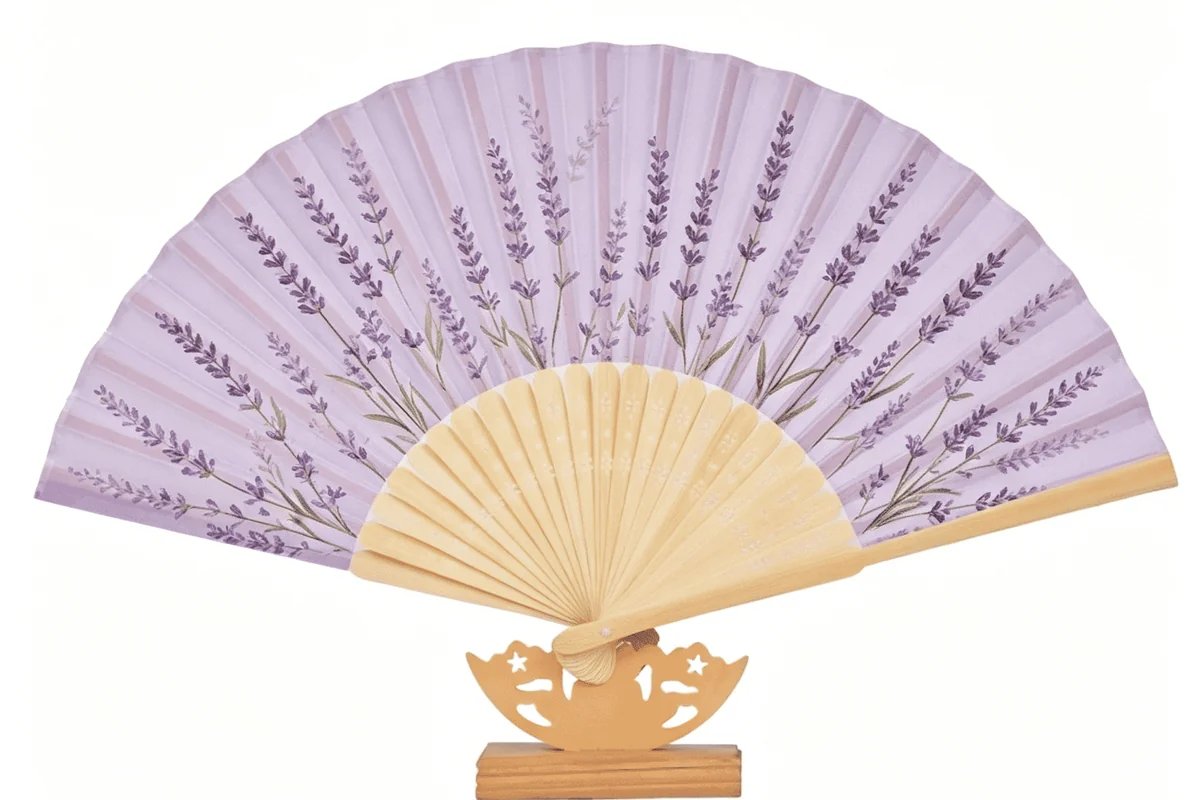
Choose the sample for the question
A custom folding fan sample should answer a specific question: does the construction feel right, is the artwork readable, or does the finished fan fit its packaging? Ask what the sample includes before paying for it. One sample does not automatically prove every detail of the order.
| Sample or proof | What it can show—and what it cannot |
|---|---|
| Existing fan | Handling, materials and construction of that fan. It does not prove your artwork or a different specification. |
| Digital artwork proof | Spelling, layout, orientation and the proposed position of each design. It does not confirm physical color, texture or opening action. |
| Printed material sample | Print on the stated material, if this option is available. A flat piece does not show how the design looks across assembled folds. |
| Assembled custom fan | Your proposed combination of print and construction. Ask about any substitute materials; it does not prove the quality of an entire future batch. |
| Fan with packaging | Fit, presentation and removal. One packed sample does not establish protection through every shipping condition. |
Check size and handling
Use the agreed drawing or specification to measure the closed fan and any important open dimensions. State the units and measuring points. If the fan must fit a sleeve, box or display, check the actual items together.
- Open and close the fan normally. Look for catching folds, loose ribs, an overly stiff pivot or parts that shift.
- Hold it as a user would. Check accessible edges, the grip and any tassel or attachment.
- Inspect both sides and the folded edge. Look for visible damage, loose material or uneven assembly.
Report what you observe rather than “quality seems poor.” A close-up photo identifying the affected fold or rib helps us investigate the problem. A brief hand check is not a durability test or a guarantee of batch performance.
Read the artwork on the open fan
Check every name, date and line of text at the finished size. Read it across the folds, then turn the fan over and check the reverse design and orientation. Important details should remain clear when the fan is held naturally.
Look for print that disappears into a fold or sits too close to a cut edge. For two-sided artwork, check whether the reverse design shows through the material. Do not judge these points only from a flat digital layout.
For color, provide a physical sample or a clearly named reference and agree how it will be compared. Screen settings, lighting and the printing material affect perceived color. A phone photo is useful for discussing placement, but it is not reliable physical color approval.
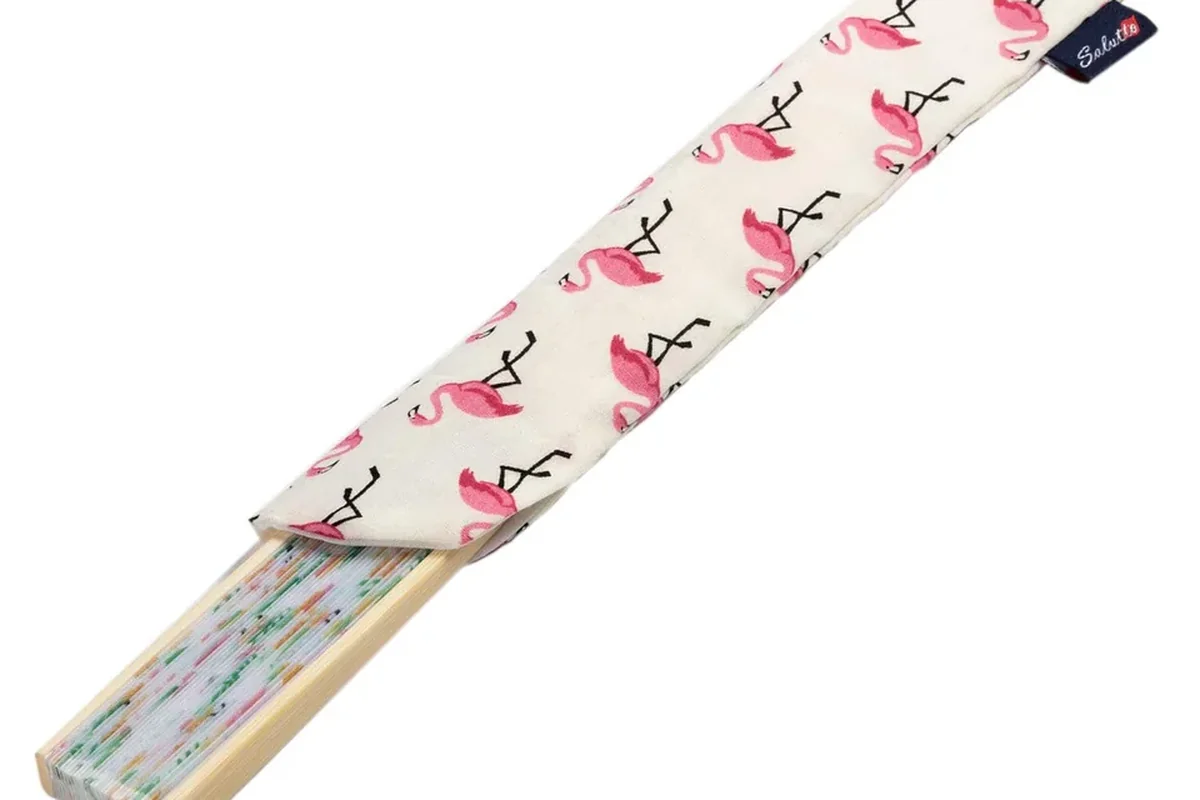
Check the complete gift pack
Put the fan into the proposed packaging with every insert or accessory. Close it and remove the fan again. Check that the packaging protects the folded fan without forcing it, and that printed details remain visible as intended.
For mixed designs, confirm how each version will be identified and packed. Use a plain packaging sample to check fit only if its dimensions and construction match the final pack; printed wording, color and finish still need review.
Record approval and remaining changes
Identify the sample and artwork version, then list what is approved and what still needs changing. State separately whether bulk printing may begin.
- Sample: record the sample identifier and artwork filenames.
- Approved: name the accepted materials, construction, dimensions and printed details.
- Corrections: mark the exact location on a photo or drawing and attach revised artwork where needed.
- Next review: say whether you need an updated proof or another physical sample.
- Production release: confirm whether production is approved or must wait.
Send one agreed reply if several people review the fan. We will confirm the effect of requested changes on the sample work, cost and timing.
Allow time for review and revisions
FoldCool’s typical sample-making time is 3–7 days. Typical bulk production is 7–15 days. Shipping is separate from both ranges; sample delivery, buyer review and any revision also need time in the overall plan.
Confirm the sample type, materials, fee, shipping cost and proposed schedule for your design. Ask how additional revisions are charged and whether any sample fee credit has conditions. None of these should be assumed from a general production-time range.
If you change the material, frame, size, printed side or packaging after approval, ask which earlier checks are no longer valid. A corrected digital proof may settle a spelling change, but it cannot demonstrate a changed physical construction.
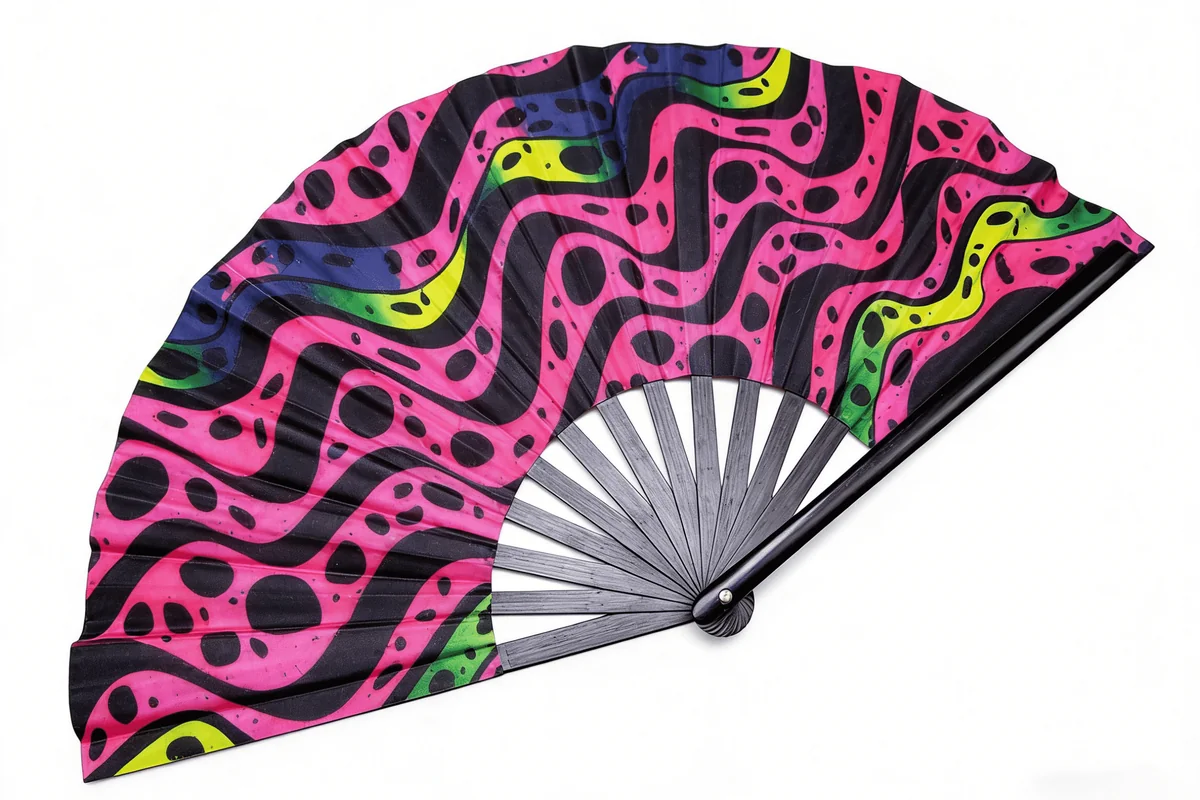
Keep the approved sample
Keep the approved fan, final artwork and a short written specification together. Mark the sample so it is not confused with an earlier version, and confirm we are using the same reference for production checks.
When the order arrives, compare it with that agreed reference and report specific differences promptly. The sample is useful evidence of what was approved; it does not replace agreed order inspection requirements.