
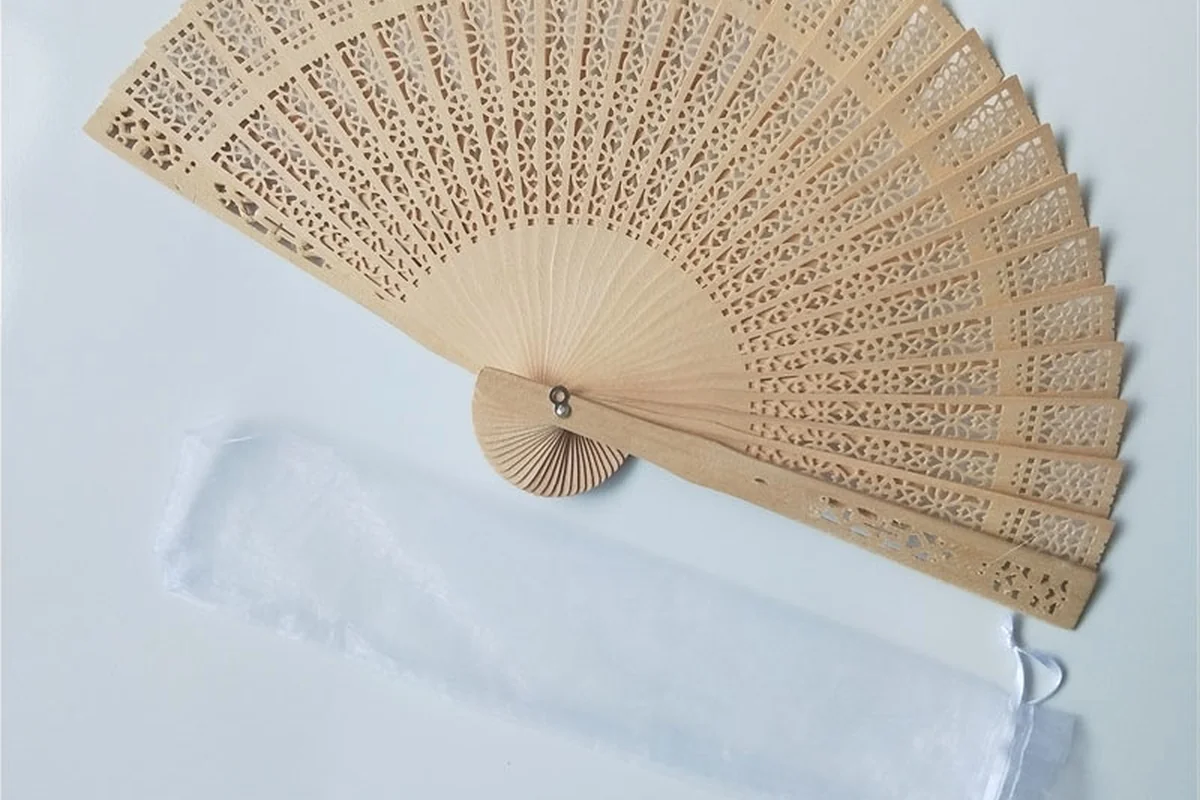
Choose a fan people can keep using
Start with a fan that opens comfortably, fits the intended bag and has artwork people will still want after the event. A reusable design is useful only if it survives normal handling and has a reason to be used again.
Try a finished sample rather than choosing by “natural” or “eco” labels. Check the grip, leaf attachment, closing movement and pack fit. For repeat events, an undated design can stay relevant; put changing schedules or dates on a separate card when that suits the project.
Order for the people likely to receive a fan and decide where unused stock will go. A cheaper unit price does not make surplus stock useful. A simple protective sleeve may be enough for a handout, while a pouch may suit regular carrying.
Know what the fan is made from
Ask for the materials of each part, not just a description such as “bamboo fan.” That phrase may describe the ribs while leaving the leaf, pivot, finish and packaging unspecified.
| Part | What to check |
|---|---|
| Ribs and outer guards | Actual material, surface finish and comfortable handling |
| Paper leaf | Printing, fold quality, coatings and any backing layers |
| Fabric leaf | Fabric composition, lining, attachment and permitted cleaning method |
| Pivot and accessories | Hardware, tassels and any added decorations |
| Sleeve or box | Material, coatings, inserts and whether the pack has a useful purpose |
Compare paper and fabric samples for the intended use. Fabric should not automatically be treated as washable or waterproof. Moisture can also affect the adhesive in silk fans.
Give the fan simple care instructions
Follow the care instructions supplied with your fan.
- Open and close gently with both hands, following the folds. Avoid snapping or crushing the leaf.
- Carry it closed in a suitable pouch or sleeve, away from objects that could catch the paper or press on the ribs.
- Keep it dry and store it away from direct sunlight and damp, poorly ventilated places.
- Use a soft, dry cloth gently for surface dirt. Do not wet-clean a paper leaf or use alcohol wipes.
- If it gets wet, blot gently with a dry cloth and let it dry in the shade before storage.
Include a short care note covering opening, moisture and storage. Match it to the actual fan and packaging.
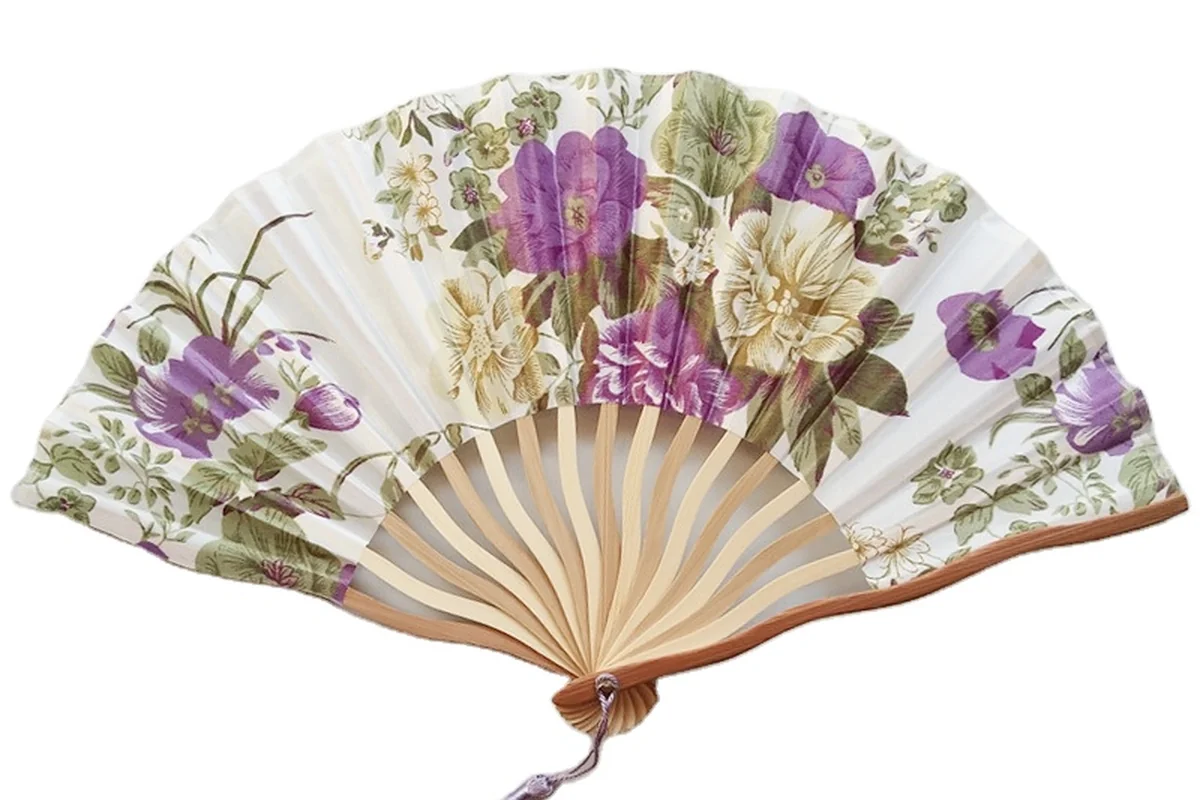
Plan and record reuse
For a personal gift, choose artwork and packaging the recipient can keep. For venue-owned fans, decide where used fans will be returned, inspected and stored before the next event.
Separate unused returns from used fans. Check for tears, loose ribs, stains and opening problems. Follow the cleaning guidance for the assembled fan; do not assume a paper leaf can be wet-cleaned for another user.
Record the number actually used again, the event and the date. Returned or stored stock does not establish reuse. A reuse count also does not establish carbon savings; a carbon comparison needs evidence covering the products’ life cycles and their use.
Describe the material or benefit precisely
Describe the verified material or benefit and identify the part it applies to. Avoid broad, unsupported claims such as “green” or “eco-friendly.”
| Claim | Information to provide |
|---|---|
| Material composition | Name the rib, leaf and packaging materials separately |
| Recycled content | Identify the component, verified percentage and measurement basis |
| Reuse | State the number used again and keep the use record |
| Reduced packaging | Identify both versions, what was weighed and the measured change |
Check the documents for the actual order before using percentages or badges. A statement about a sleeve or one component should not imply the same benefit for the complete fan.
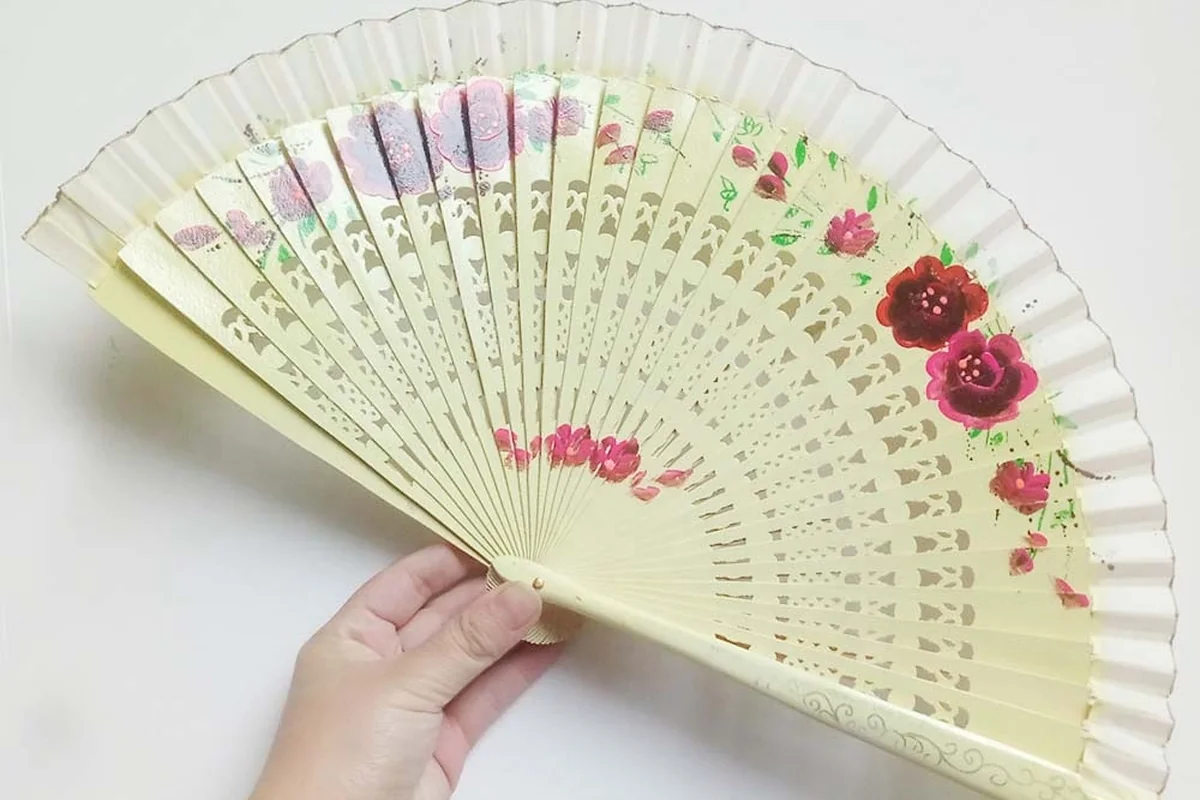
Measure packaging changes consistently
Compare the complete old and new packs, including sleeves, inserts, labels and fasteners. Remove unnecessary layers only if the remaining pack still fits and protects the fan.
Material reduction by weight = (old pack weight − new pack weight) ÷ old pack weight × 100%.
Weigh both versions using the same method. If only the sleeve is compared, describe the result as a sleeve change. Include any new insert or accessory when reporting a reduction for the complete pack. Keep the measured weights and identify the versions compared.
The packaging guide covers fit, handling and transport checks for the revised pack.
Check disposal locally
Do not put a complete folding fan into a paper recycling bin simply because its leaf is paper. The ribs, adhesive, coatings and hardware need to be considered, along with what the local program accepts.
Check local recycling rules. Ask about the actual item and its separate packaging. Do not describe a fan as compostable merely because some materials came from plants; a compostable claim needs evidence for all materials it covers.
Where the evidence is limited, a clear material description and useful care instructions are better than an unsupported environmental promise.