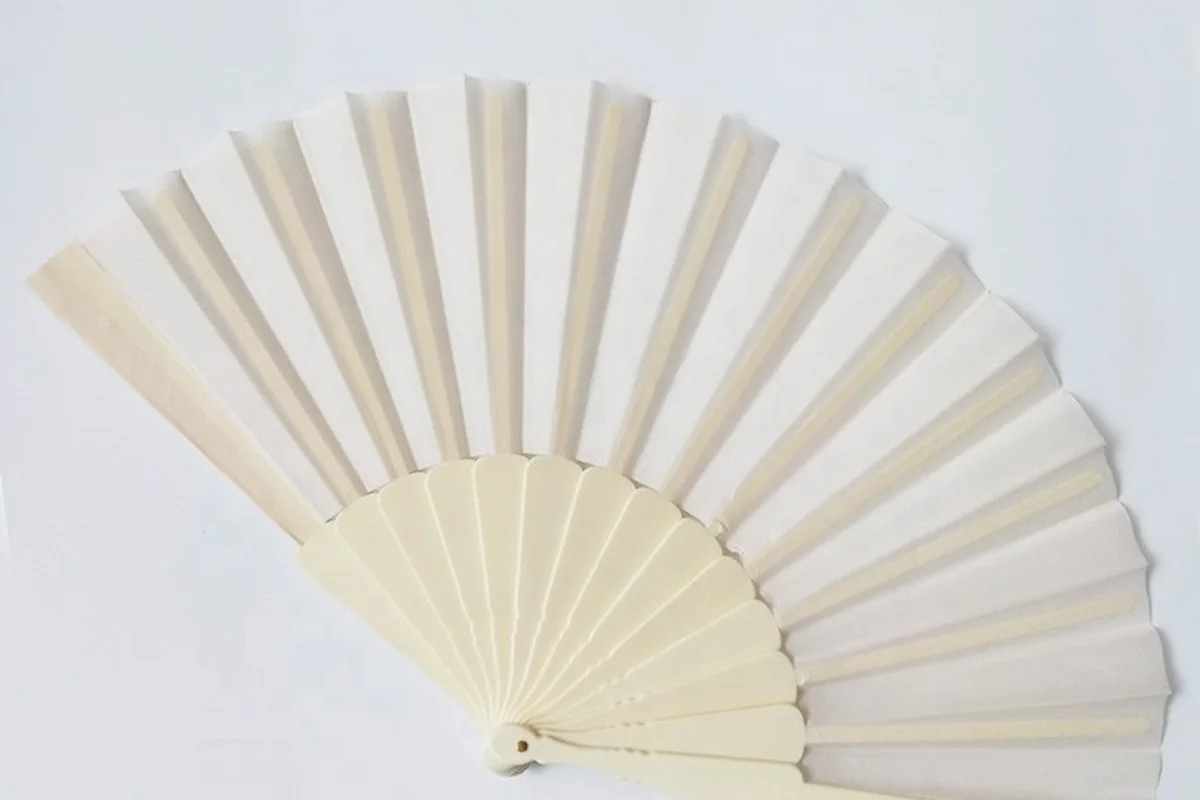
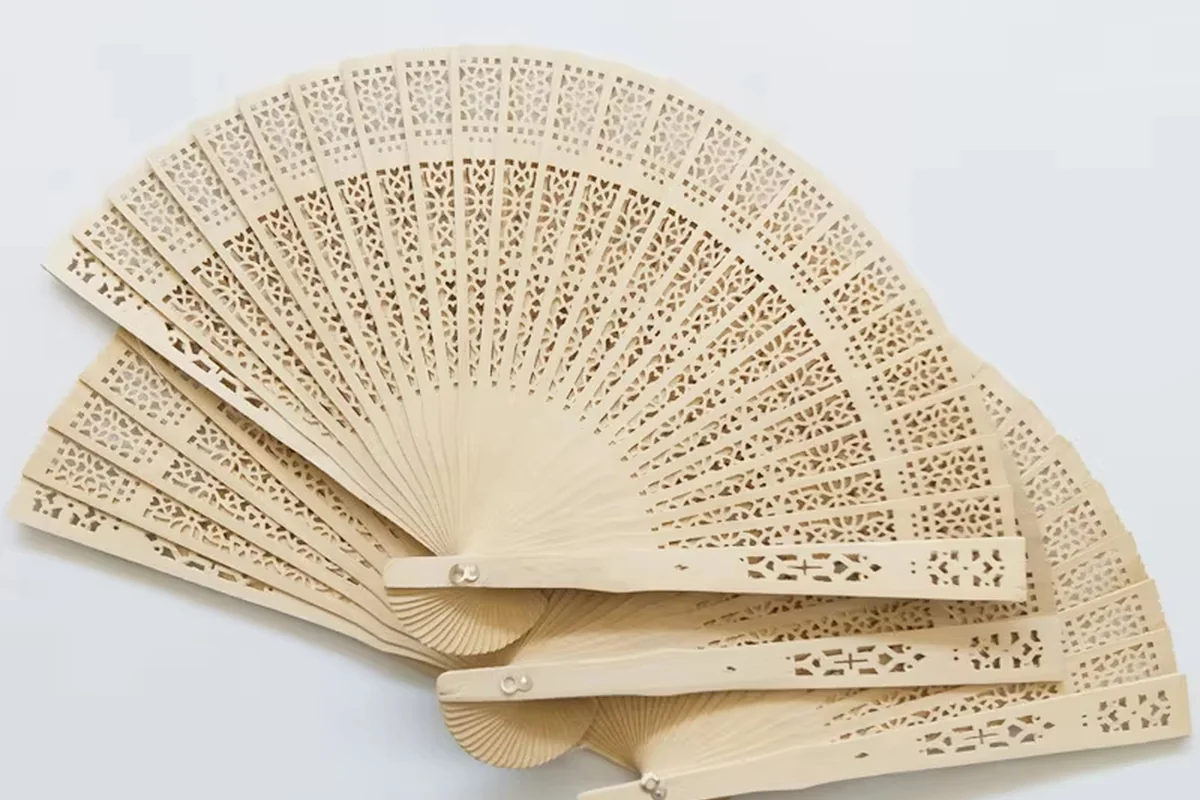
Bamboo and common fan woods
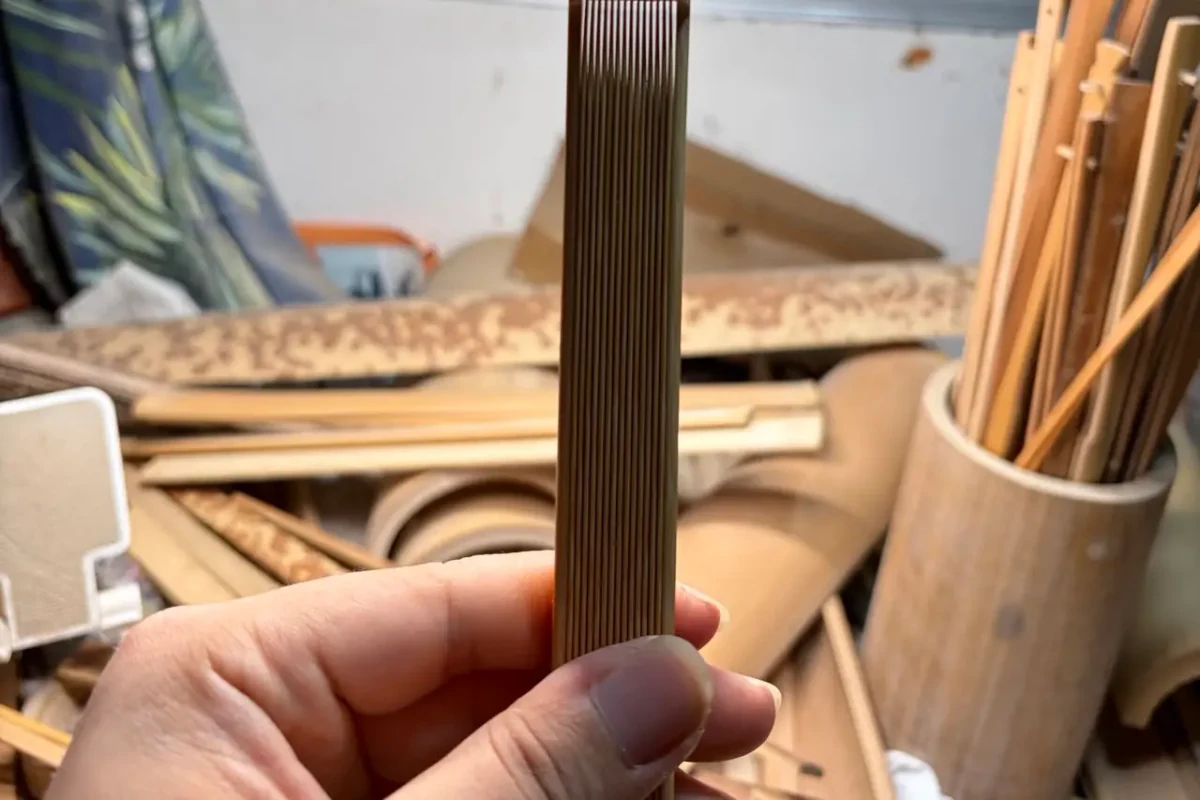
Bamboo is a useful starting point for a fan with a visible natural frame. A wood frame is worth comparing when a particular grain, shape or finish matters to the design. Neither name guarantees lower weight, greater strength or smoother opening.
Wood fan frames can use pear, birch, beech, sycamore or ebony. Name the species and finish you want rather than “premium wood,” and confirm availability for your order.
| Frame option | Why compare it | What to inspect |
|---|---|---|
| Natural bamboo | Visible grain and a pale frame beside the artwork | Surface smoothness, shade variation and guard edges |
| Stained or painted frame | A frame color chosen to match or contrast with the leaf | Coverage at edges, rubbing points and consistency between pieces |
| Named wood species | A particular grain, carved shape or polished appearance | Actual species, finish and complete fan weight |
| Carved or pierced guards | Decorative detail in the part held in the hand | Smooth cutouts, intact narrow sections and space for any logo |
Bamboo frames can have a natural or black finish. Color alone does not identify the material, and a pale frame is not necessarily unfinished.
Ribs and guards do different jobs
The narrow inner ribs support the paper or fabric leaf. The two outer guards protect the closed fan and form the grip. Their width, thickness and shape matter as much as the frame material.
For a specification using total rib count, 16 ribs means two guards plus 14 inner ribs; 18 means two plus 16. More ribs can change the spacing and folded thickness, but the count alone is not a quality grade. Use the size and rib-count guide to describe the construction clearly.
Compare samples of similar length and shape. A wide, thick guard can feel more substantial while adding weight and taking up pouch space. Narrow pierced sections deserve a close look for damage. Do not bend a rib deliberately to compare strength.
Check the grip, finish and guard logo
Look at the fan open and closed. Much of the inner frame is covered when open; the outer guard remains visible when the fan is put away. Place a proposed guard logo on the actual available area instead of assuming the full guard length can be printed.
A dark mark may disappear on a dark stain. Compare it on the lightest and darkest acceptable frame samples. If the design depends on a pale logo or an engraving, evaluate the real result; engraving is not a printed color.
Feel the intact guard where the thumb and fingers rest. Inspect edges and cutouts before handling. A glossy surface can look smooth while an edge still feels uncomfortable. Natural shade variation and poor finishing are separate issues: cracks, splinters and loose hardware should not be accepted as natural character.
Recognize common frame problems
| Problem | Likely area to investigate |
|---|---|
| Catching at one opening position | Contact between a rib, guard and leaf fold; do not assume the pivot is responsible |
| Guards do not line up when closed | Guard shape, folded leaf stack and assembly alignment |
| A guard bows away from a straight reference | Part shape and storage conditions; compare without pressing it flat |
| The pivot feels loose or moves unexpectedly | Fastening and assembly; set the sample aside for correction |
| Rough cutouts or splinters | Cutting, sanding or damage at the named location |
Photograph the affected area and a full view showing its position. Compare a second sample at the same stage of opening. Identify the affected rib or guard and the opening position where it catches.
Compare weight and movement fairly
Weigh complete fans with the same leaf size and accessories. A tassel, heavier leaf or extra guard decoration can outweigh the difference between two frame materials. Compare how each fan sits in the hand as well as the scale reading.
Open and close both samples normally, then try the intended sleeve or box. Smooth movement, a comfortable grip and a reliable fit are useful selection results. A dramatic opening snap is not a substitute for them, especially if the fan was not designed for that action.
Keep samples dry and away from abrupt changes in storage conditions. Wood exchanges moisture with the air, which can affect its shape and movement. Storage requirements depend on the material and finish.
Specify the frame, finish and rib count
Send us the frame material, closed length, total rib count, guard shape and finish you want. For a logo on the guard, include its position, size and color. Count both outer guards when specifying the total number of ribs.
For a wood alternative, name the species if it matters and include a reference photo for the grain and finish. Send the leaf design too: a frame that looks attractive alone may compete with the artwork. Compare the chosen sample with the actual packaging before fixing the insert or pouch size.