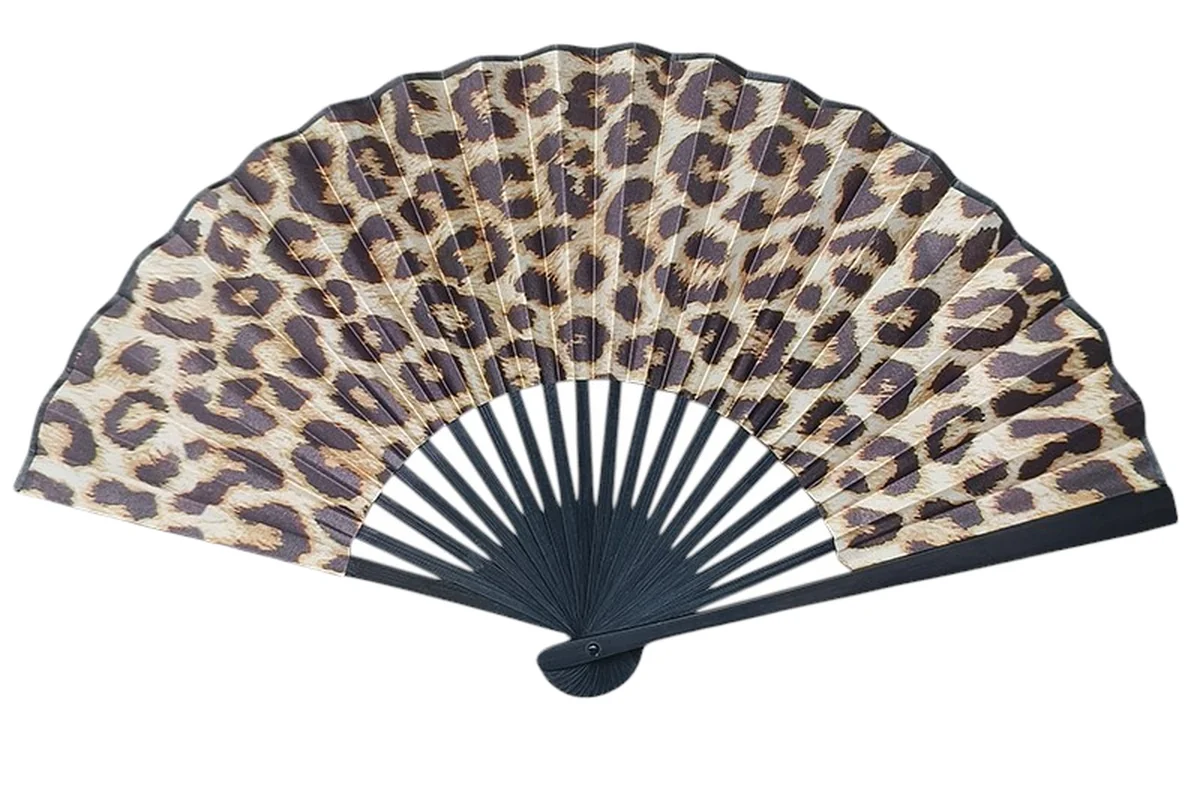
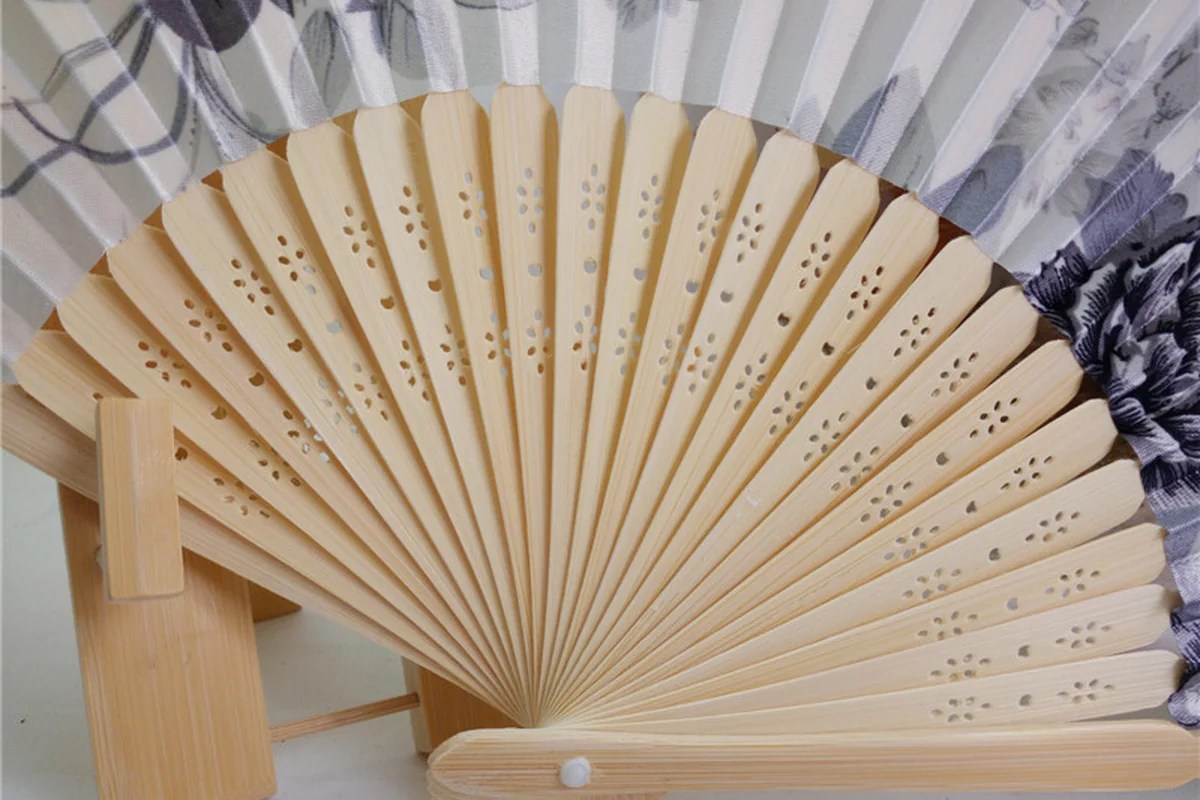
Paper and fabric options
For a printed schedule or detailed illustration, start by comparing smooth paper with a fine, evenly woven fabric. For a textured wedding favor, consider mulberry paper. For a textile feel, compare cotton or polyester samples. These are useful starting points; the finished print and folds decide which works.
| Leaf material | What to look for | Best reason to compare it |
|---|---|---|
| Smooth paper | A fairly even surface; confirm whether it is coated or uncoated | Small lettering, line drawings and full-color artwork |
| Mulberry paper | Visible fibers and a handmade surface | Texture that forms part of a simple design |
| Cotton fabric | Weave, base shade and any stiffening treatment | A cloth feel with a printed or decorative design |
| Polyester fabric | Weave and compatibility with the proposed ink or transfer | Photographs and gradients using a suitable digital process |
Fan leaves can be made from mulberry paper or fabric, including stiffened cotton mounted on wood frames. Confirm the material and frame combination for your order. “Silk-style” or “imitation silk” describes an appearance, not proof of silk fiber.
Match the surface to the artwork
Look at the smallest useful detail in your design. For a map, that may be a street name; for a portrait, the eyes; for a logo, a narrow gap between letters. Print that detail at its final size on each candidate leaf.
Texture can be attractive in an open area and distracting behind small type. Keep important text on a quiet background. A pale fabric base also becomes part of the printed color: an unprinted white-looking area may simply be the material showing through.
Dye sublimation uses no white ink and works best on suitable white or light-colored polyester. That makes it a useful process to discuss for a photographic polyester fan. It does not mean cotton, real silk or a dark fabric will accept the same process. See the printing comparison before changing the leaf.
Weight, thickness and opacity are different
GSM means grams per square metre. It describes material weight over an area, not how thick or opaque the leaf is. Materials with the same GSM can differ in thickness, stiffness and opacity. Measure grammage and thickness separately when comparing paper.
For fan selection, compare a flat swatch and an assembled fan. The swatch shows texture and print; the fan shows the thickness of all the folds together. A heavier leaf does not automatically make a stronger fan, and the weight of the whole fan includes its frame and hardware.
Keep the same size and frame when comparing leaves where possible. Otherwise, a heavier wooden guard can obscure a small difference between paper and fabric.
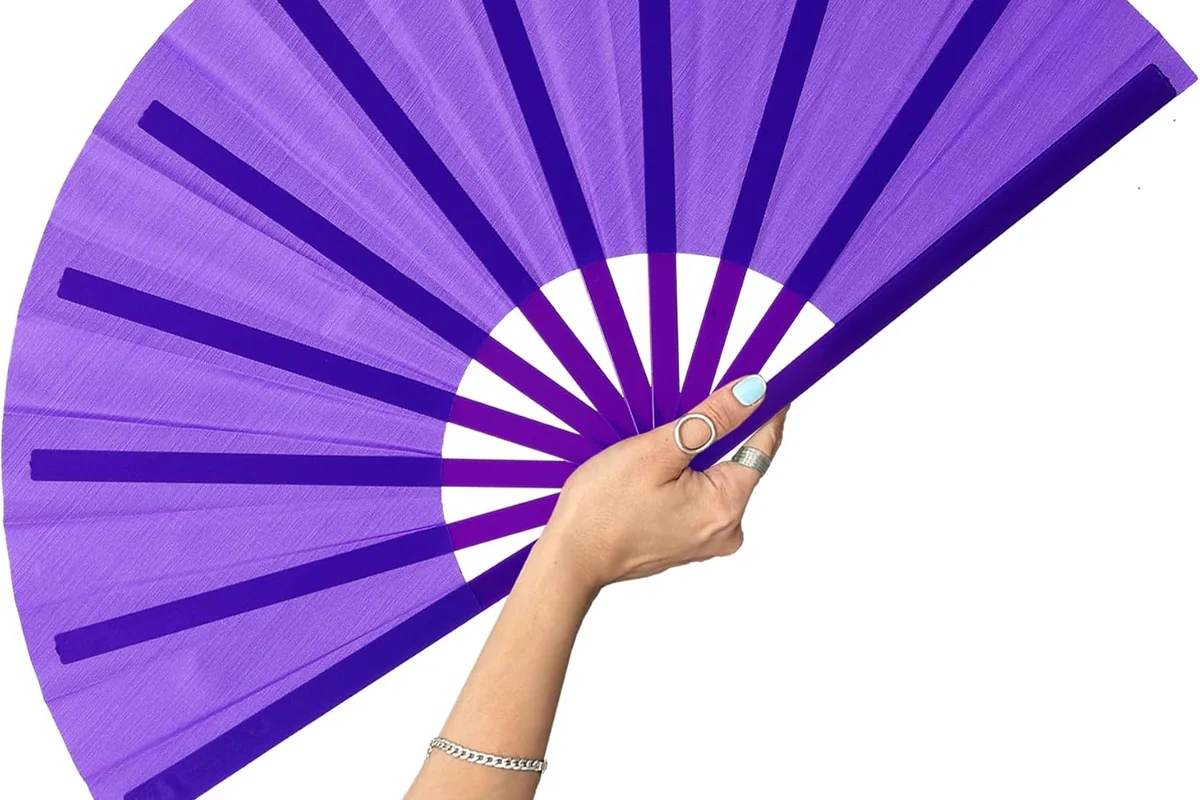
Check both sides in the intended light
Hold the sample normally near a window, then under the light where it will be used. A pale schedule behind a dark picture may be readable in one setting and distracting in another. Check the assembled fan with the real front and reverse designs.
If the opposite image interferes, first try moving or lightening the dark area behind the text. Then compare an alternative leaf if needed. Extra layers or a different material may change the folded thickness, so try the pouch again. Neither “paper” nor “fabric” guarantees an opaque result. The double-sided guide explains the layout options.
What common defects tell you
| What you see | What to check next |
|---|---|
| Letters look soft before folding | Original file, final print size, surface texture and printing process |
| Text is clear flat but hard to read on the fan | Its position across folds; shorten or move the wording |
| A light line appears along a crease | Compare the flat print with the folded leaf for cracking or lost coverage |
| Paper lifts or cloth comes away from a rib | Attachment at that location; a different material weight alone is not a repair |
| The fan catches when going into its sleeve | Folded thickness, loose edges, wrapping and sleeve opening |
Open and close a sample gently several times and inspect the same places again. This can reveal an immediate problem; it does not prove a service life. Stop if a rib cracks or an edge becomes sharp.
Choose the leaf for readability, texture and fit
For guest information, favor clear text and easy handling. For a keepsake, compare texture and presentation after the print is readable. For artwork on both sides, give show-through more weight than the material name.
Keep a flat print and the chosen assembled sample. Send us the leaf type, base shade, printed sides and intended use with your sample request. Avoid describing the fan as washable, waterproof or more sustainable from the leaf alone; the ink, frame, finish and attachments also need to support that claim.